I asked myself that question repeatedly when the Lord called me to be a missionary in Malawi. I had been reading a lot about unreached people groups and the 10/40 window. The thought of doing missions in such countries was exciting and, frankly, seemed a lot more logical than coming to a “reached” country. “Why Malawi, Lord?” I asked.
After two years in this country, I think I understand. Of course, there is also the slightly significant matter of obeying the Lord, even when it doesn’t seem to make sense. But apart from that, I now firmly believe that Malawi desperately needs the gospel.
A really good prayer
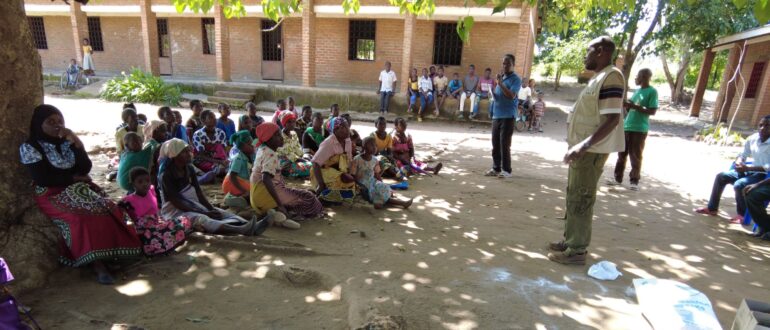
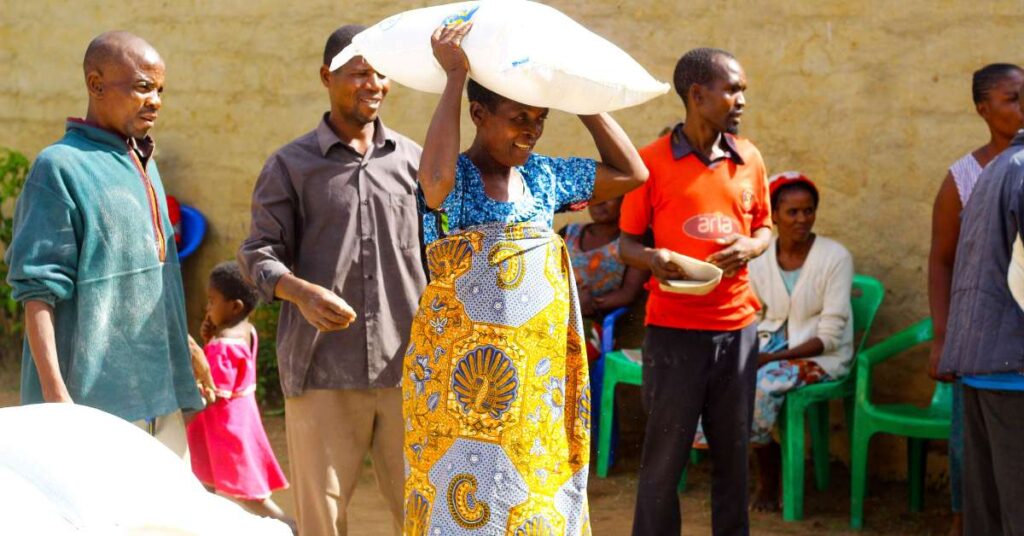
Let me illustrate using an incident that happened recently when we were visiting one of the displacement camps with basic food supplies and the gospel. One of the Malawians opened for us in prayer. It was a good prayer, really – asking for the Lord to open hearts to truly listen to the word of God and asking it all in Jesus’ name. From the way the others murmured agreement, you would have thought you were among believers.
But as soon as Goodson started sharing the gospel, it became evident that this was not the case. It’s a scenario that I’ve seen repeatedly in this country. Goodson began by asking how one can be right with God. And the answers I’ve heard so often started coming from the crowd – including the one who had led us so nicely in prayer: leave your sin, try to follow the ways of Jesus, repent, love your neighbor, do good works. Even after an explicitly and pointedly clear gospel message from Goodson, one of the men closed in prayer by saying how wonderful it was they could be saved by following God’s law.
The fact is, despite what the statistics from different mission organizations say, Malawi has not been reached with the gospel. Yes, everyone (apart from Muslims) goes to church on Sundays. Yes, everyone (again, apart from Muslims) believes that the Bible is God’s word. And yes, every school (apart from the Madrasas) has a Bible Knowledge class. But the gospel of grace has penetrated very few hearts. Millions of Malawians are desperately lost, completely blind to the truth of salvation through faith in Jesus Christ.
Door wide open for missionaries
Praise God that the door is wide open! Malawians respect the word of God. This provides a good foundation for sharing the gospel – something we have lost in the West. The hardships that characterize the lives of the average Malawian also make them painfully aware that they need God. And there is complete freedom to share the gospel pretty much everywhere: public schools, marketplaces, the list goes on.
But the laborers are few indeed. And so, we ask you to pray with us “for the Lord of the harvest…to send out workers into His harvest field” (Luke 10:2). There is simply too much work for our small team to do. And while we are actively seeking to train Christian Malawians to share in the work of the gospel – and we ask for your prayers for this, as well – there is still a need for many more laborers. The need is overwhelming, and the doors will not be open forever.
Again, I urge, pray “earnestly to the Lord of the harvest to send out laborers into His harvest” (Matthew 9:38). “I tell you, open your eyes and look at the fields! They are ripe for harvest. Even now the one who reaps draws a wage and harvests a crop for eternal life, so that the sower and the reaper may be glad together.” John 4:35-36
I’m writing this on my return flight from Blantyre, Malawi at the end of my unplanned visit to assess the effects of Cyclone Freddy.
It’s been a short trip on account of the fact that my son, Philip is getting married next week. Over the years, I missed many family birthdays and anniversaries, but I can’t miss that!
I had little idea what to expect as I left N. Ireland around 10 days ago, having hurriedly changed plans to be with the saints in Jordan for Bible teaching.
To be honest, what I found has alarmed me.
On the one hand, I am alarmed to hear seasoned ex-pats who have spent decades in Malawi speak of a catastrophe on a scale they have never witnessed before.
On the other hand I am alarmed that for so many in this country it just seems to be business as usual.
Malawi has experienced many impactful natural disasters. Droughts and famine. Cyclones and floods. Even localised earthquakes, as Malawi straddling the Great Rift Valley. In our 20-something years of experience in Malawi, we have experienced each of these – on more than one occasion. Indeed, Freddy is the third major cyclone to hit Malawi in the past 5 years, following Idai and Ana, not to mention sever others of less intensity.
But nothing like this.
Unprecedented effects of cyclone Freddy
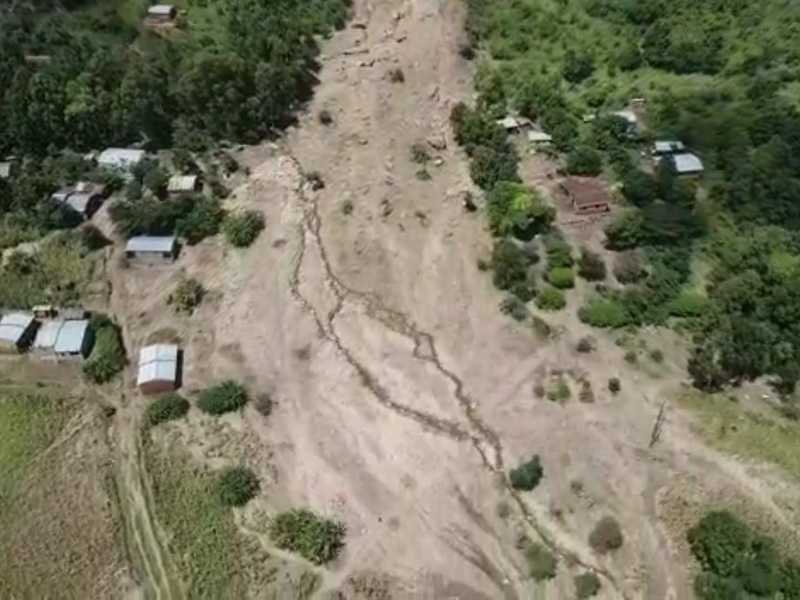
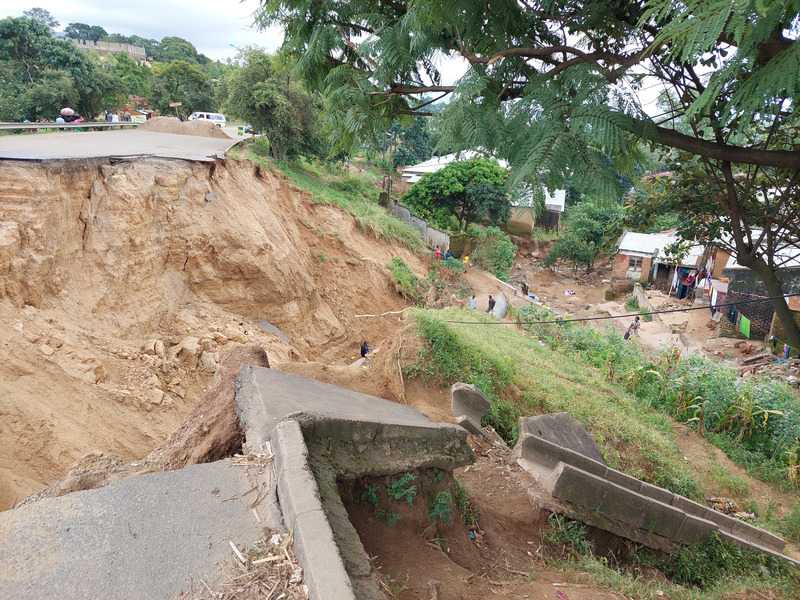
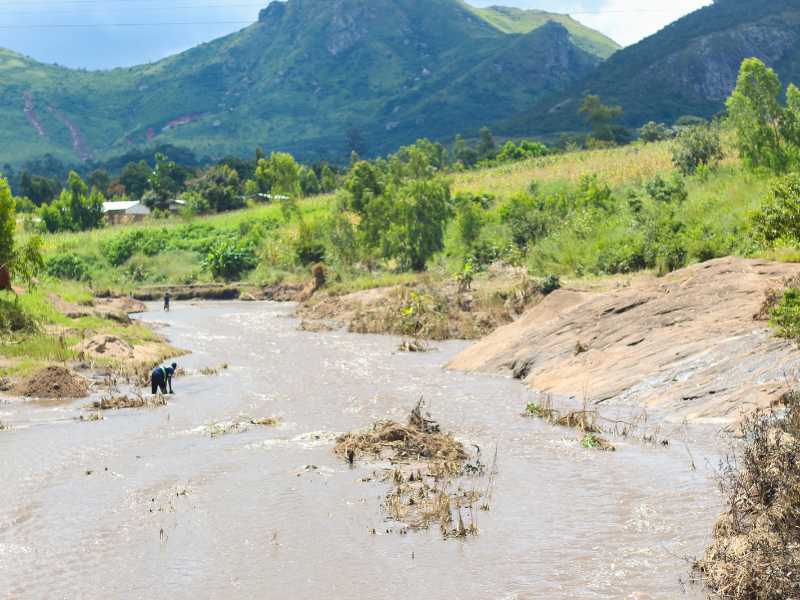
This massive mudslide ripped through Njuli villageThere has been serious damage to infrastructure, impeding the relief processThis river burst its banks, carrying people to their deaths
Meteorologists reckon that Freddy may have been to most powerful cyclone on record. Its destructive force was unleashed twice on Mozambique. Freddy made landfall some time earlier before retreating to the Indian Ocean. It then returned to batter the African continent for a second time. Over the weekend of 12 March, Freddy unleashed around 6 months’ worth of monsoon rain in as many days, or less.
Blantyre Slum Dwellings
It’s not the first time that the low-lying Shire valley and Phalombe plain has flooded. But the effect on Blantyre’s unplanned and over-crowded slum townships is simply unprecedented.
The first funeral I preached at in Malawi was not far from where so many perished because of cyclone Freddy. A young child had drowned after falling into a slum bafa – a communal un-plumbed bathing area. Thousands of homes are piled on top of each other along the sides of the city’s landmark mountains – Soche, Ndirande, and Mchiru. Most have no form of drainage or sanitation.
It was a disaster waiting to happen.
Yet, Malawians have got used to hardship and disaster. It’s a way of life. Or death.
Disasters – a way of life
Before 12 March millions of Malawians were already struggling. As they have done to greater or lesser degrees for most of their lives.
Malawi is presently the 11th poorest country in the world.[1]
In August last year, 3.8 million people were expected to face high levels of acute food insecurity (IPC Phase 3 – Crisis). Almost 6.5 million others categorised as IPC Phase 2 (Stressed) and at needing help to avoid disaster risk and improve their livliehood protection. Experts were already predicting that 21 of Malawi’s 28 Districts would be struggling with food insecurity between October 2022 and March 2023.[2]
That was before Cyclone Freddy.
The reasons are many.
It is true that Malawi lacks the natural resources that many of our regional neighbours are blessed with. In their place, corruption, nepotism and mismanagement abound.
Lack of opportunities and a culture of jealousy conspire to make Malawi an unlikely place for the capable to succeed. Able young people pursue education and opportunity overseas, and understandably never come back. Thus, the brain-drain dooms Malawi to be led by a succession of people not good enough to make it overseas, but clever enough to cheat their way to comfort at home.
Nothing works in this country!
On my recent visit, one long-term resident of Malawi complained angrily, “Nothing works in this country! They’ve stolen everything!”
It’s true. The country’s infrastructure is broken down.
You can’t get a driving license in Malawi because they can’t import the plastic cards. And even more seriously, I couldn’t buy coffee beans because the roastery couldn’t find gas!
I know that doesn’t sound like much of a hardship, but think about the business owner who’s losing coffee sales every day because the country is broken.
Or the business owner who wouldn’t even give me a quotation for an irrigation pump, because he’s embarrassed to contact his supplier for a price, knowing there is no foreign exchange in the country to actually buy the pump if I say yes.
So the demand for coffee beans falls, hurting the coffee growers, and the price of maize goes up, because people like us who would grow food in the dry season can’t – even if we could find fertiliser.
And then came Freddy!
Overwhelmed by need
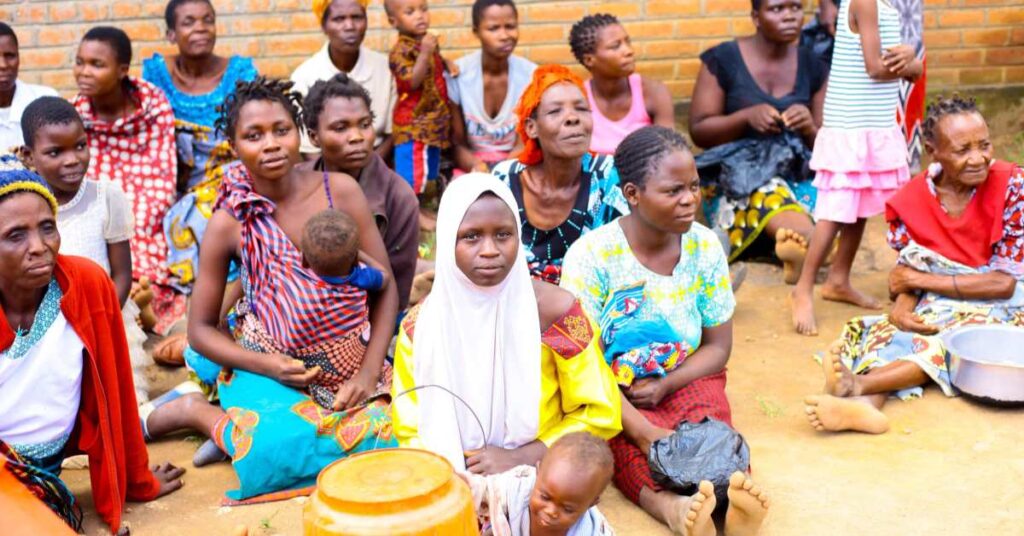
Unfortunately, I can’t give you up-to-date statistics. The authorities seem to be overwhelmed and unable to stay current with the numbers. However, it is safe to say that hundreds of thousands of people have been displaced by the extensive flooding and mudslides. In our District (Zomba) alone, there are almost 50,000 people living in evacuation camps because their homes were either destroyed or damaged by the cyclone. Many of them are children and elderly. Around half have received no assistance yet, 3 weeks into the crisis. That is partly because of the sheer scale of the catastrophe. And partly because the network of mostly dirt rural roads can’t cope with the volume of rain which has and continues to fall.
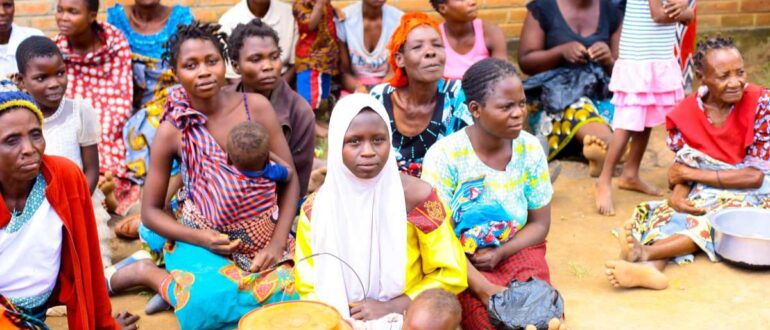
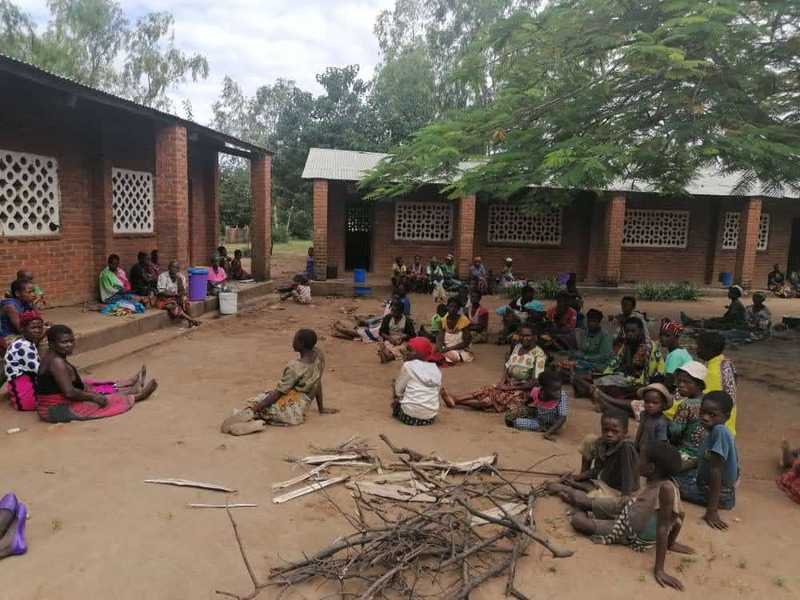
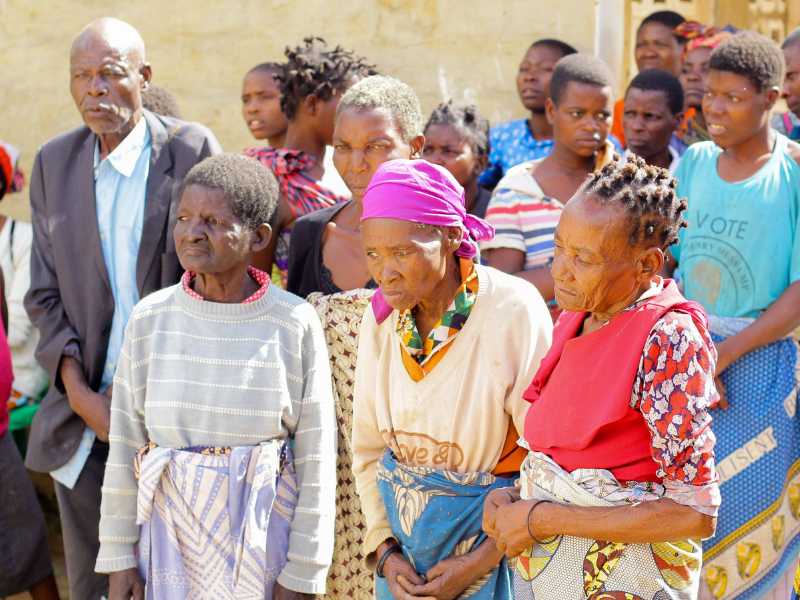
In most cases the camps are nothing more than empty school classrooms. Typically that means bare earth or cement floors and unglazed windows. Many have no bedding and some may even have no change of clothing. The camps are fertile ground for those seeking to exploit vulnerable women and children.
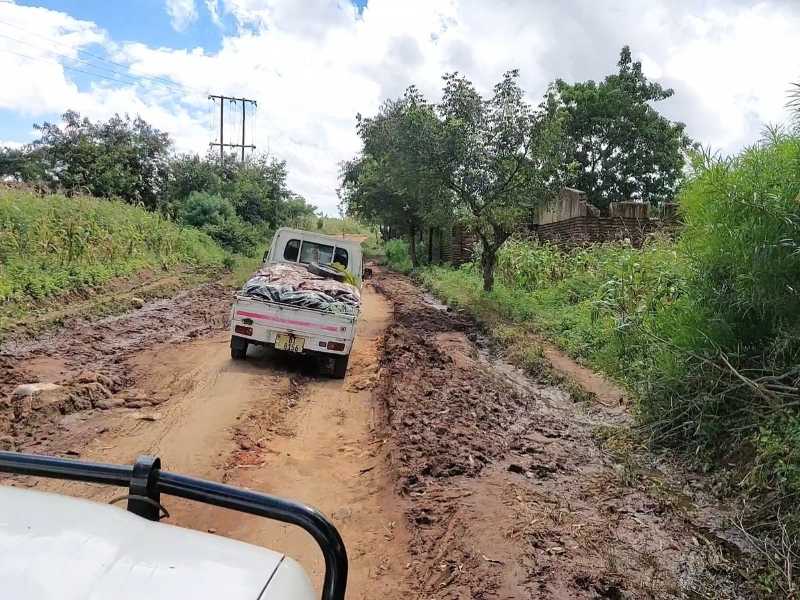
Isolated Evacuation Camp in Zomba DistrictThe poor condition of the roads have made it difficult to reach survivors with aidThere are many old people in camps…and children
More than a week ago, the total number of displaced households exceeded 114,000 – that’s likely to be over half a million people. These poor, mostly uneducated people, are not responsible for the mismanagement and corruption of their country. They aren’t to blame for coronavirus and they didn’t start the far-away war in Ukraine. But they are certainly paying the price!
As one person wrote to me recently, “We are overwhelmed by a world in need.” It is indeed overwhelming.
I give thanks that our Saviour is never overwhelmed, and I am truly grateful for the grace of his people who continually respond in kindness and generosity. As a result of this kindness we are able to make a small but meaningful contribution to the relief effort.
Tropical Cyclone Freddy claimed the lives of thousands, while hundreds of thousands more have been displaced by the flood and mudslides. SALT is working to relieve need and share the Gospel among a few of them in the Zomba and Chiradzulu districts. We shot this video during our visit to Lisao Camp, approximately 10 days after the cyclone struck.
It seems like every day we hear fresh stories of desperation. We thank the Lord for moving his people to give so that we are able to respond to some of those most in need.
It’s now two weeks since Cyclone Freddy began to wreak havoc across Southern Malawi. We have been trying to come up with an appropriate incident response plan.
The body count continues to rise. However, it is doubtful if we will ever know the true number of people who perished. Many were washed away by flash-floods or buried in the devasting mud-slides which ripped through the slum townships in Blantyre and elsewhere. A Christian worker known to us through a mutual friend, knows of an entire family of 10 who all perished under one roof.
The need is overwhelming. We have only limited resources.
There are at least three categories of need, and we have decided to respond to each as follows:
Immediate Needs
In the village group of which Saidi forms a part, around 230 families have experienced total or partial collapse of their homes. Many are still living in what remains of their houses. Some are living with relatives, while others are housed in one of nine camps (mainly in school buildings vacated for the purpose). Some of these camps are in remote areas and very difficult to reach.
We have decided to help two camps in our area, plus a further one in Chiradzulu District, known personally to Brother Harold. We estimate the total number of people to be around 600-800 in total.
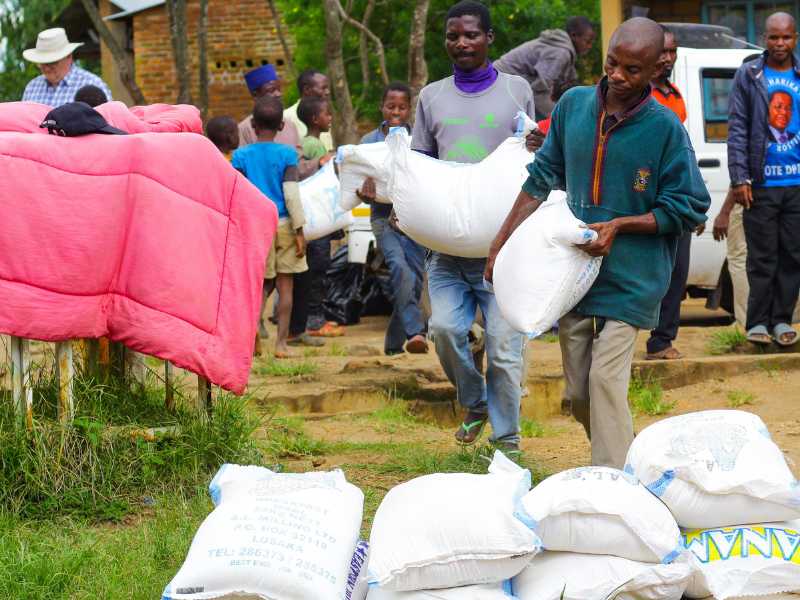
Already, we have distributed 30 x 25Kg bags of ufa (maize flour) to Lisao Camp (Chiradzulu), enough for 5KG / family. This will probably be sufficient to survive for 4-5 days. With resources to hand, we believe we can manage to supply a similar amount to the three camps, once every two weeks until the beginning / middle of May.
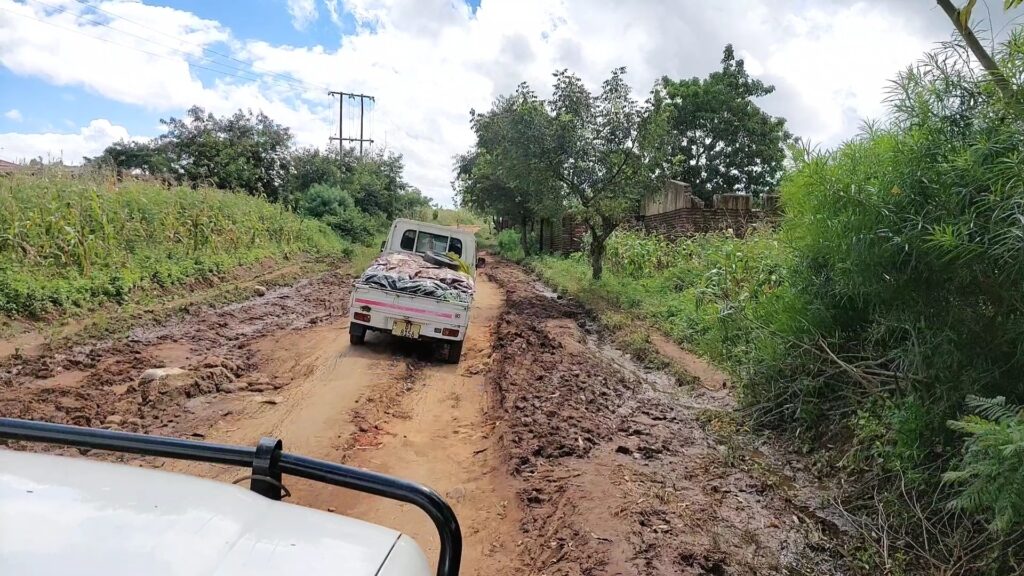
It was an “interesting” road into Lisao, but worth it to see the cooking fires lit.
With greater resources we would be able to make more frequent supplies. We could even include other essential items, like blankets, kitchen & cooking utensils, mosquito nets, and water sanitising tablets. However for the time being, this is what we can manage.
We also plan to assist those affected in our immediate community with a one-off supply of a similar (5KG) quantity. Not much. But something.
This does not take into account the needs of many of our literature distributors who have been affected.
Medium-Term Needs
It’s impossible to do anything right now about repairing / rebuilding damaged or destroyed homes, as the rainy season has not yet finished. However, by May, people will be starting to think about rebuilding.
The needs will be immense and we will not be able to help all, or even most. Nevertheless, we will try to assist those who are most vulnerable, especially widows and others with no reasonable expectation of help.
Right now, we have no funds to help with rebuilding, as our priority is to feed the hungry. Experience tells us that we can build a simple house to an acceptable standard for around $1000 / £800. That means with cement mortar / plaster instead of mud. How many people we are able to help will depend on what funds are available.
Long-Term Needs
It’s clear that there will be many survivors who have experienced life-change physical and psychological trauma. For example, we are aware of one lady who lost everything, including her husband and children. She was presumed dead, but was dug out alive from the mud. She is in hospital, the skin scraped off the front of her body, needing multiple fractures repaired. The state provides no care for people like that. When she is discharged from hospital, she has only her frail, elderly mother to care for her. We have undertaken to provide for housing and living assistance (and will be happy for any benefactors willing to partner with us in caring for her). There will be many, many more people with similar needs. For a very long time.
We have reluctantly decided to cancel the Bible Teaching conference planned for May. The relief effort following Cyclone Freddy is going to demand so much of our time and resources that it will be impractical to proceed. Besides, many of those we were expecting to attend have been affected by Freddy too, and simply won’t have the means to travel.
As we have already bought air tickets for the speakers (David Williamson, Jim McMaster and me), we have decided that we will instead use the time for relief and Gospel work among the cyclone victims we have begun to help. Please pray that this will prove to be a good decision.
We are disappointed that we’ve had to make this decision. This is the 5th consecutive year our annual teaching program has been interrupted – twice due to a Presidential election, twice due to Covid, and now this dreadful disaster.
The temporary camp at Lisao is home to 433 displaced survivors of the devastating mudslides and floods that swept so many to their death.
The partially decomposed body of one sister in the Lord was buried where she was found, some 15 Km from her home.
The camp has been mostly cut off and has received only one supply of food in the past 10 days – enough to last a 2 or 3 days at most.
Harold made a difficult, exploratory journey on motorcycle today to assess the needs there. The people are hungry and afraid of a possibility of an outbreak of malaria, living as they are in open school classrooms with no mosquito nets.
We have an early meeting tomorrow with the local village chiefs in our area to discuss how we can help there, and then Harold and I are going to try to get through with supplies in the afternoon if the road is passable. Please pray that it will stay dry overnight and that my ageing Land Cruiser (which has given so much trouble of late) will rise to the challenge.
Above all, pray that the Lord will overrule in these dreadful circumstances to bring glory to his Name, and blessing to the lost.
Many of my friends in the U.S. have either personally experienced or know those who have experienced extreme weather events. In some areas of the country, we have it down to a system.
The rain has eased enough for Anna and Goodson to begin to assess the damage in the surrounding community following Cyclone Freddy.
Anna writes: ” We walked. 😉 Not even trying to drive today.
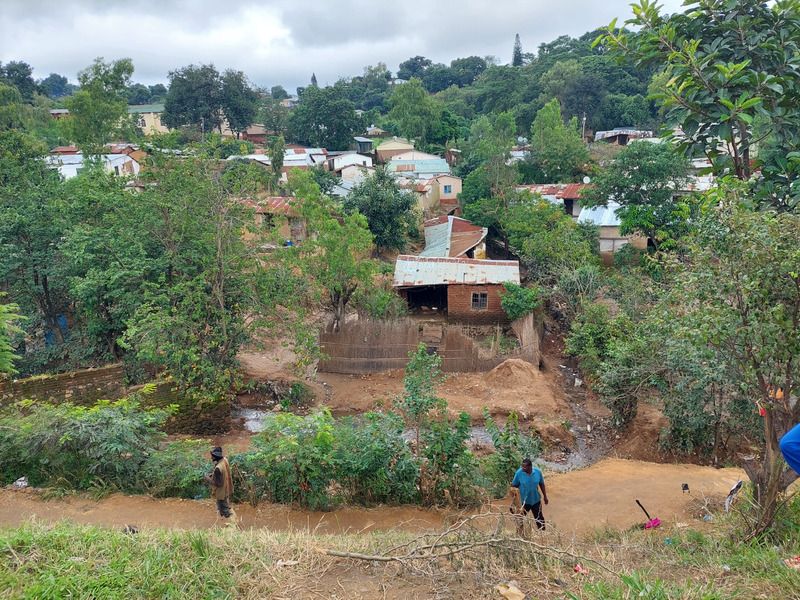
“Some pictures are following. The damage is extensive. Many, many houses have fallen. It’s a bit overwhelming.
“And, yet, what we are facing here is nothing compared to other parts of the country – where entire villages were swept away by mud slides.
“Please pray for wisdom to know how to help when the need is so overwhelming.”
Many, many houses have fallen. It’s a bit overwhelming.
Anna
A selection of the damaged houses in our community
In Blantyre, the situation is particularly bad in some of the very overcrowded townships. Blantyre is surrounded by mountains, and many of the townships are built on lower foothills, making them susceptible to mudslides. Homes are typically built with mud-brick, often with only mud for mortar, and building standards in the townships are not enforced. A recipe for disaster.
In the immediate aftermath of this disaster the needs are:
Plastic sheeting for emergency shelter
Blankets
Food
In the longer term there will a lot of reconstruction to do.
We have begun a process of talking to the local village chiefs to see who the most needy and vulnerable are.
Here is a selection of heart-breaking news pieces from reliable sources:
As heavy rain continues to fall, the situation continues to develop. It’s still too early to say what the scale of the disaster is – but it is a disaster! The death toll from Cyclone Freddy Malawi has already exceeded 100, and some people have been in touch to ask what they can do as part of the relief effort.